Acceptance and shipment capture
Take shipments over by import or capture them directly at the gate. Corrections and damage cases are documented on the record itself instead of ending up in a separate list.


The warehouse system for air cargo terminals — acceptance, inventory, pickup and billing in one place.
The air cargo warehouse decides whether a shipment makes its flight. Running acceptance, inventory and pickup on paper, spreadsheets and shouted updates costs time and traceability at once. Wairhouse covers the warehouse process end to end, from goods-in to billing — with an interface built for the floor rather than the desk.
Works well with
Drivers create their free QR pass themselves. Wairhouse can start directly at acceptance without retyping the same data.
Captured from the running system. Customer and forwarder names and reference numbers have been replaced with placeholders for this page.
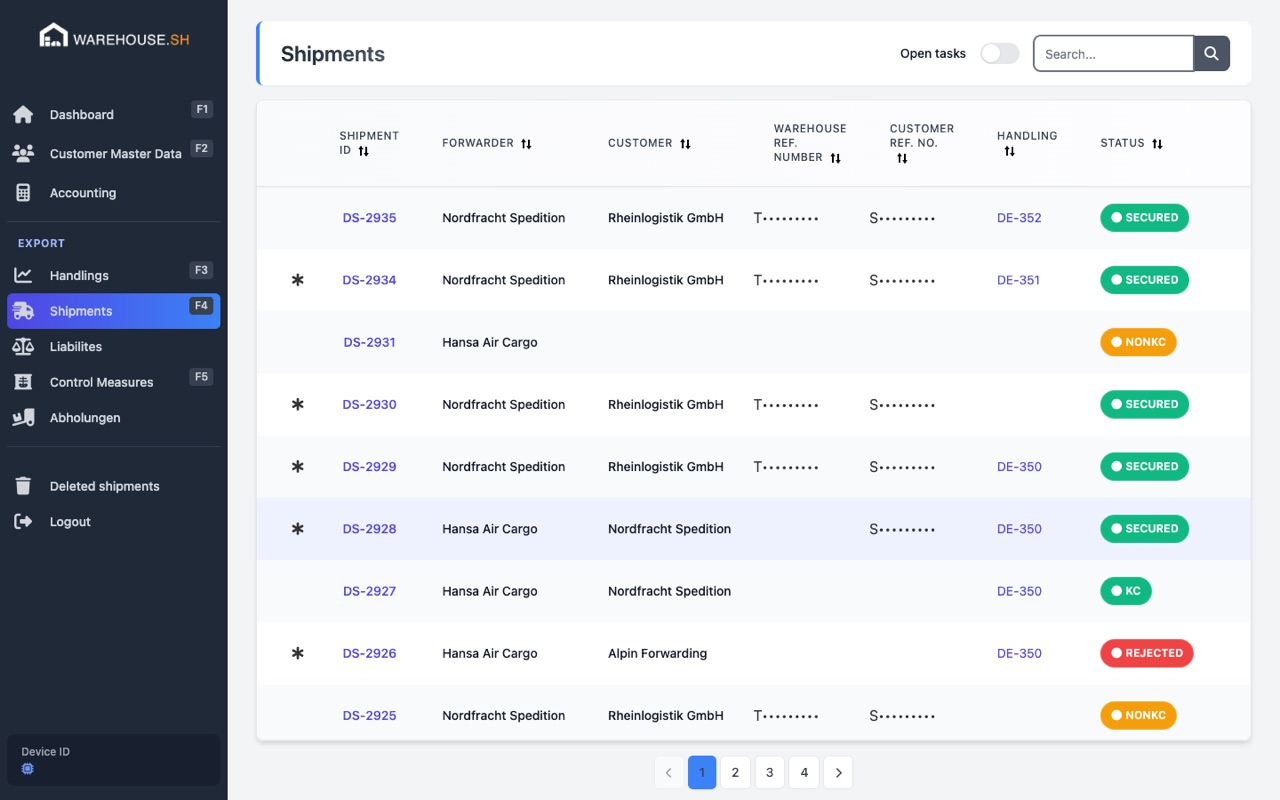
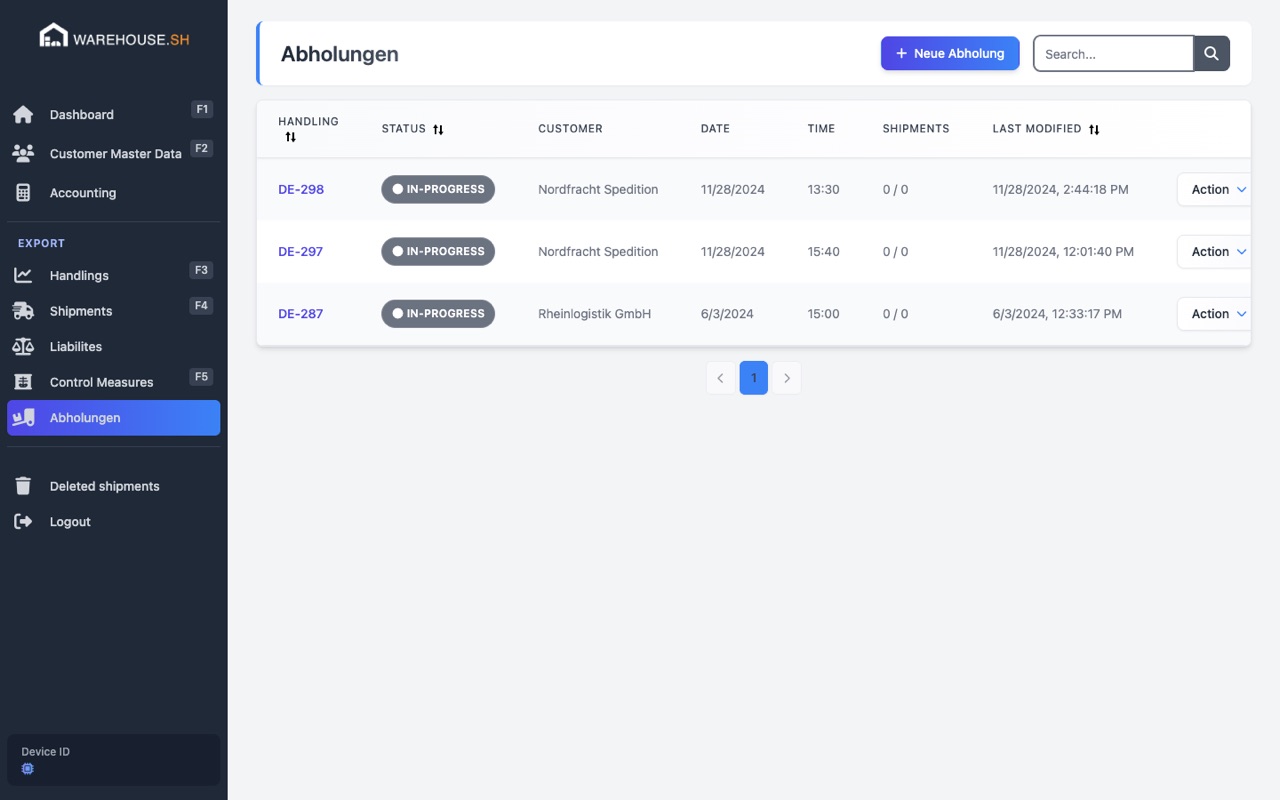
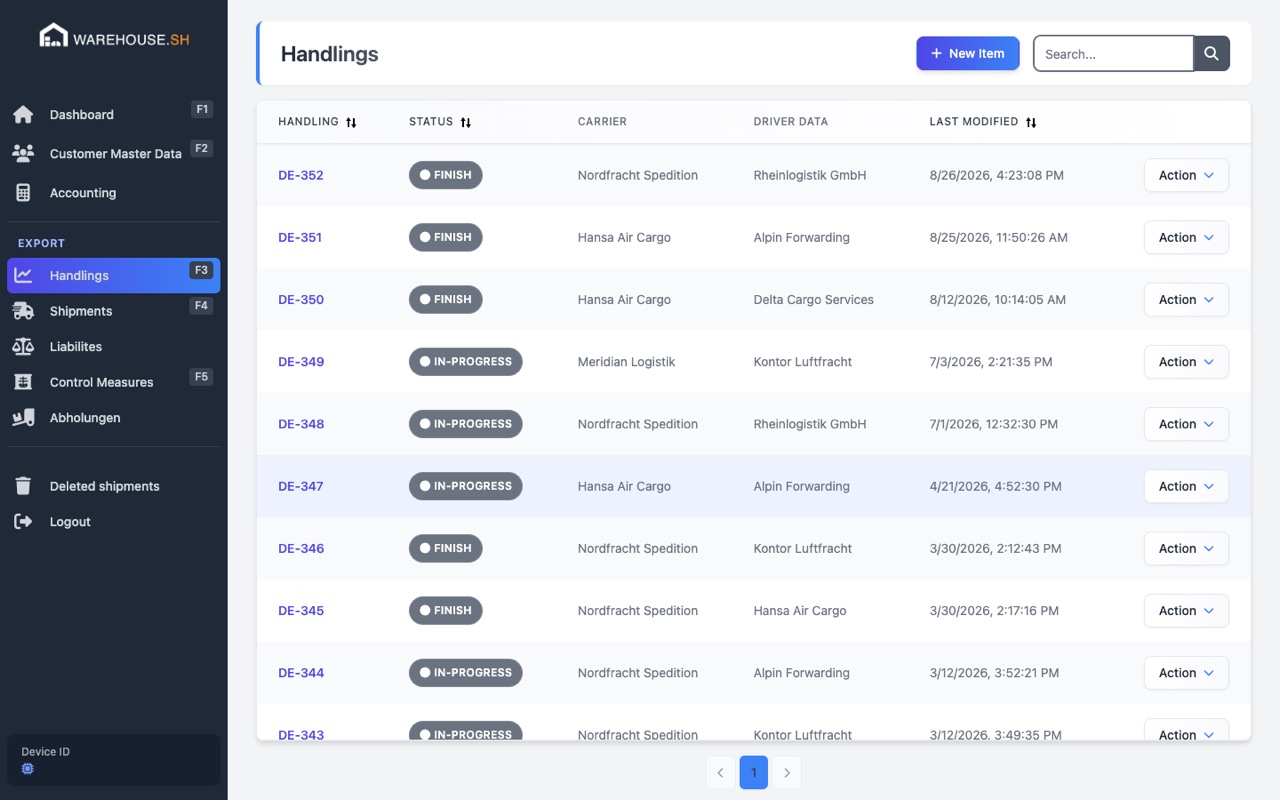
Take shipments over by import or capture them directly at the gate. Corrections and damage cases are documented on the record itself instead of ending up in a separate list.
Every item in the warehouse stays findable at any time — with status, history and whereabouts. That replaces asking around on the floor with a look at the inventory.
The pickup list shows what is due; the activity log shows what happened. Together they provide the evidence that is otherwise missing when a claim comes in.
Checks that were carried out are recorded on the record and stay traceable — a topic that is audited regularly in the air cargo warehouse.
Warehouse services and liability cases run in the same system as the operational record, so billing draws on data that was created anyway.
Terms and master data are held per principal, so recurring processes do not have to be agreed again each time.